Monday, March 28, 2011

The Sparks'


I'm working on a story. 
It has a lot of roots in a lot of places, but among them: racist Nova Scotia, patriarchy in black culture, the solitude of childhood, the power of music. 
And the systemic failure of our "civilized" institutions.

I'll try to get http://bethanyhorne.com up and running to contain it.

Friday, March 11, 2011

Japan

Saturday, January 29, 2011

Work

Justseeds "Work" Calendar. $15.

My calendar this year is a poster-sized, arty, glossy wall calendar about work. What work do we do, why do we do it, and, radically, what does it mean.

I've been grateful for the art in this calendar these past few weeks. I've been struggling with my job: not the work itself, but everything surrounding it that tries to get in the way of, ruin the effect of or remove the meaning from the work itself. Publishing is thrilling, but if the mix of people and abilities is off, then doing the work is really, really hard. 
2011 is going to be a year of work. Personal projects and paid employment are just two expressions of that quest for satisfaction and excellence in the practical things that I do. I have a lot of loan to pay off, as of this spring, but I'm going to continue the struggle, even as finances take priority, for the work that I do to be about satisfaction more so than remuneration or the filling of time. 

I want to reprint the words at the back of the calendar, because they embody what I'm thinking about as I work throughout this year:

What is work? In a broad sense, “work” is the activities that produce a result; for our concerns, let’s call that “social wealth.” Yet it’s a question that begs so many more—perhaps none more pressing than “What should work be?” We all have ideas of what work shouldn’t be: mind-numbing, exploitative, hierarchical, dangerous, disempowering, etc. Though things get muddled when we try and flip the question around.
When we say that work should be creative, just, cooperative, healthy, and empowering we are laying an ethical, more than practical, groundwork. Ethics alone won’t help us solve questions such as “What share of the social wealth and I due for the time I spend at work?”; “Does my time parenting contribute to the social wealth to the same degree as my work as an electrician?”; “How do we place value on different kinds of work that each contribute to the social wealth?”; “If I choose not to contribute to the creation of social wealth, am I guaranteed any part of it?” These aren’t trivial questions—nor are they entirely new. But before we get too philosophical about it, let’s remember that at the end of the day, the water still has to flow from the tap, we need eyeglasses, and food and shelter are a must. So yes, the struggle to re-envision work is ethical, philosophical, theoretical, and practical.
And if work provides social wealth for all, perhaps we should make a distinction between working to produce for the good of all and working for a paycheck. Is it possible that our economy morph into one based on reciprocity instead of profit motive? Can we erode class society by building institutions and practice that militate against it? Can we create a sense of pride and dignity in our work practices, with a domino effect of solidarity to follow?
So we have before us a calendar produced by the hard-working aesthetes at Justseeds. For every month there’s a new image relating to our topic of work: be it the pleasure of work itself, the hard times, the fight for our rights, the global financial system and its creep into our world of work, or the fight for control over our lives.
Let’s spend this year thinking about the world of work, our own and that going on all around us. And let’s peer into how it numbs minds, exploits, kills, and disempowers and how it could be creative, just, cooperative, healthy, and empowering. Maybe after next year we’ll be that much more prepared to answer the perennial question, “What should work be?”

Thursday, October 21, 2010

Homecoming Dalhousie

"The Dalhousie Gazette speaks for itself. The Gazette is to represent the views of the Students, to advocate their interest and strive in all things to cultivate that love and intensify the sympathy that should exist between Alumni. 

The editors are to be little more than judicious censors, to select wisely what shall be published, to endeavour, in a new sense, to practice the art of 'putting things', and by worthy service hope to earn the praise of being faithful Exponents of Students' views. 

If among much that may prove dull there be found some sparkling of pleasure or wholesome goods let it expiate the fault. When you find many blemishes, learn to avoid them, and ere you condemn produce a work more faultless, while we timidly suggest the words of Horace: Carmen sequar, ut sibi quiuis speret idem, sudet multem frustraque laborat, ausus idem."

- The Dalhousie Gazette, 1869

Sunday, October 03, 2010

Timeline of G20 ISU media highlights

Comment on the blog entry if you want to add something—this is definitely not comprehensive, just my first attempt to collect relevant links.
The timeline is meant to examine how the PR campaign of the police forces perhaps changed over time, and how parallels from definitive moments can be drawn to protest policing (and protest policing PR) in other cities, post-9/11.


Saturday, June 19, 2010

Getting ready to cover the G20

This is the "Protest Tip Sheet" Toronto Star reporters covering the G20 were given:


First off, this is NOT a tip sheet on how to cover a protest. That’s between you and your editors. This tip sheet is about how to get through a protest with minimal pain or injury, culled together by J-- R--- and S--- L--- at the Toronto Star from experiences at WTO protests in Seattle, FTAA in Quebec City, IMF and World Bank in Washington, the OAS in Windsor and attendance at the protester’s own training camps.

·       Get a gas mask. Old army surplus gas masks may offer some relief from tear gas, but filter canisters have a limited shelf life. Check expiry dates. Keep the mask concealed until needed. People may want to take it from you, and they won’t ask politely.
·       Keep a bandana soaked in vinegar in a Ziploc bag with you at all times. If your gas mask is stolen, or you don’t have it with you, it will be a backup. Place the bandana over your nose and mouth.
·       If you are stationed at an active fence demonstration, consider a helmet. Hardcore protesters throw rocks. Again, keep the helmet concealed until needed.
·       Ear protection. The sound cannons are new, so the best advice we can offer at this point is get good ear protection, from ear plugs to construction-grade ear covers. The closer you intend to get, the better protection you'll need.
·       Water bottle with a spray top. Not just for drinking. If you are gassed, and it gets in your eyes, spraying with water is the only cure. Aim for the corner of your eye by your nose. Water should flush around your eye and clear out the gas. Better yet, get someone else to do it. Not surprisingly, the protesters tend to be good at this.
·       How you dress is important. If you look like a protester, you are more likely to be treated as one by riot police. If you don’t dress like one, more militant protesters may surmise that you are a member of the main stream media or police and target you. In Quebec, hardcore guys threw paint-filled balloons at media. It was Barney purple, and very difficult to remove. So, try to strike a balance in how you look.
·       No natural fibres. Tear gas sticks to natural fibres, so wear nylon, polyester, etc. The last thing you want is to take that stink home, and we don’t want it here. Consider a change of clothes for going home.
·       Hide press credentials until you need them. Protesters often don’t like the “corporate media.” That said, riot police in the heat of the moment may not care if you are press, even if you happen to be Lloyd Robertson.
·       Food and caffeine. Carry with you. If the protests get bad, shops will close and you will have a tough time staying fed and caffeinated without leaving the story. High-energy power bars are good.
·       Know where you are and how to get out fast. Police in the past have fired waves of tear gas, at varying distances, all at once. This can cause great panic amongst less hardcore protesters and cause a stampede.
·       Rubber bullets, at close range, will break bones.
·       Don’t pick up a detonated tear gas canister with bare hands. They are hot. Very hot. If you must, kick it away.
·       Concussion grenades. These are loud bangs that will make you think a gun has gone off right beside you. They are meant to disorient, and they do. They are also hot, so don’t touch.
·       Tasers. Given the bad press for Tasers, we may not see much of them here, but they were used in Quebec City to break up protesters who sat down in the road and refused to move.
·       If you get enough of a snoot full of tear gas, you will find yourself on your hands and knees, leaking big time from eyes, nose and mouth. It will be very hard to breath. This is normal. You will be disoriented, but try not to panic, find relative shelter, if you can, and ride it out. You’ll feel like you’re dying but you’ll live. Flush your eyes.
·       If at all possible, pair yourself with another journalist and watch each other’s back.
·       If you are carrying electronics, beware of water canons. A waterproof bag is a good idea.
·       Have a pencil stowed away. In the event you and your notepad take an unexpected shower, you can still write with that. Those big, thick pencils meant for kindergarten classes are best, since the leads don’t break as easily.

Sensitivity to gas increases as the protest goes on. Tear gas can be like bee stings – it gets worse with each hit, so stick closer to these tips as the protest wears on.
You will need a shower after a day of being gassed. Remember, that the gas will cling to your hair (it’s a natural fibre), so the first thing to do in the shower is hold your head back and stick your face into the shower.
Otherwise, the gas in your hair will go straight for your eyes.
Be careful, and alert, and you’ll be okay.


If you are going to the protests next weekend and want to meet a real life Star reporter, to maybe get your picture with them or something, I have created the following professional-grade sketch of one, so you can more easily identify them in the flesh. Keep in mind, his bandana baggie and camera are stashed in his back pockets:


The reporter might also look like this:

Saturday, May 29, 2010

Intern, 3/4

Ok, at this point in the internship, the whole "writing an internship report" thing is getting old. 


     What can I really say to distinguish week three from week two? Drama and conflict perhaps. That usually works as a lead. 
     There was a virtual fist-fight over OpenFile this week. Actually, the fight wasn't really about OpenFile, OpenFile was more of a MacGuffin in the narrative of the fight, but as a group consisting of living humans with real emotions, playing the MacGuffin for a while was drama enough. 
     In my Week One round-up of press coverage of OpenFile's beta launch, I neglected to include an article that appeared  in the NOW newspaper (or maybe just on NOW's website). The article was opinion, and it argued that OpenFile is going to face the challenges that citizen journalism sites like NowPublic regularly face, and will struggle as a result. Except, the author didn't interview anybody from OpenFile, and apparently didn't read any of of the other coverage that did contain interviews very carefully, because he got a lot wrong about how OpenFile proposes journalism with public participation could be done. Craig Silverman pointed out the errors in a comment. Jay Rosen, a guru of online journalism who teaches at NYU, casually tweeted a reference to the fact that the NOW piece committed errors, and thus the virtual fist-fight began. 
     This person presents the first of the crazy tweet punches fairly clearly.
    Even as Rosen's followers weighed in on the issue in this way, the NOW guy refused to give up! He went from error to slander when he accused Rosen of having a direct economic interest in the OpenFile company. Madness. 
     Then, some guy in Atlanta picked up on the tweetfight and analyzed it logically. I thought the coolness of the piece would put the matter to rest, but if you read down to the comments, the NOW author chose to continue his feckless campaign to clear his name. By this point, the whole thing made me laugh. 
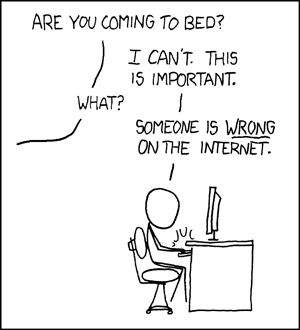
     I definitely know how this Joshua Errett guy feels. Which is why I'm trying to not be too hard on him. The Internet is a hard, hard place to project part of your life into. There is no mercy for those who make mistakes. There is no way to control what you broadcast. Everyone is expected either to self-moderate to the point of perfection, or to take refuge in anonymity. I admire those who put their real selves out there into the unforgiving environment, and I feel bad when they are punished as a result. 
     But back to the office. I'm amazed anybody got any work done as this drama unfolded. My productivity would appear to have dropped,  judging by the number of stories I filed this week (only one) but I actually have three stories I'm working on for next week. Hopefully, they will be somewhat ready by Monday or Tuesday.  
     Different things made writing difficult this week. A lot of people took their sweet time getting back to my phone calls, or they never got back at all. I went to a city council committee meeting, which was so much more stupefying to my neurons than any Dalhousie Student Union meeting I've ever been to. The main reason I got less done: the TTC and the incredible long time it takes to get me anywhere when I need to be there. Also, Thursday morning was spent wandering around downtown, looking for a street person to talk to. Friday afternoon was shortened because I agreed to give an interview to a Ryerson Review of Journalism writer who is covering OpenFile and the future OpenFile heralds. 
     In true RRJ style, she has pretty much interviewed every single person remotely related to her topic of study. She wanted to talk to me because I am a freelancer who has five stories up on the site, which is more than most people. She didn't know, when she requested an interview, that my output of stories is due to  me being an intern. She must've thought I was just an OpenFile nut -- which, I'm on my way to becoming.

P.S. Two stories interested me from a philosophical perspective this week. One journalist took on the research of a rumour about immigration raids which no one could confirm or deny. On OpenFile, that's still a worthy story, because the rumour has had wide diffusion among hispanic residents of Toronto's West End. This story was a good proposal for how coverage could evolve and keep filling the file with new information. Nothing has really come out, yet, to confirm or deny the rumour (perhaps because OpenFile doesn't have wide diffusion in the immigrant community) but I have my fingers crossed. In the future, the site's audience will be bigger, and also bigger then the likelihood that lures like this will attract actual fish. 
     Secondly, this story about a house captured a quick audience. It's almost a perfect example of what my fiction instructor would call "the human heart in conflict with itself" -- but the human heart I'm talking about belongs to the reader; it's the human heart of the contemporary Torontonian. Because, what should happen when a quadriplegic wants to raze a heritage house in order to build an accessible one she can move around in? It's a competition between two strong but conflicting desires: to preserve something that may have historical value, or to build something that has value for a family with specific and tragic needs. To make the story more interesting, the city councillor has picked a side, and underhandedly commissioned a third-party report that pulls the rug out from under the feet of the family, who are anxious to build their home. The way this story evolved on OpenFile was classic, and one Twitter user agrees: this is how the new journalism could be done! 
     And it's not citizen journalism, Errett. It's more.